

Food Truck App


Food Truck App with a Social Impact.
Duration
8 weeks
My Role
UX Research, Strategy & Design:
• Collaborated virtually with a team of 2.
• Conducted 5 out of 9 interviews.
• Designed a customer journey map.
• Wrote and designed 5 user scenarios.
• Collaborated to create and annotate the initial wireframes.
• Visual and Interactive design of the prototypes.
• Designed the final deck and collaborated on the client playbook.
The User Problem
People who live in food deserts who don’t lead a healthy lifestyle or suffer from a range of diet-related chronic diseases such as obesity, diabetes and cardiovascular disease lack sufficient access to healthful food options.
.
The Business Challenge
People living in food deserts have a higher rate of unhealthy eating habits which lead to a range of chronic diseases and affect growing healthcare costs. The challenge was to find a solution that includes a food truck that will create a positive social impact to help reduce chronic disease in food deserts, thereby improving population health.
Hypothesis
People who live and work in food deserts predominantly eat unhealthy and are subject to health issues due to not only insufficient access to healthy food options, but also a lack of education on healthy eating habits and exposure to a range tasteful, healthy eating options.
Research
Online research on existing studies revealed that unhealthy eating habits in food deserts may not lie solely with food accessibility. It could also be due to people’s shopping and eating habits. There’s evidence that suggests that increasing access to healthy food alone may not be sufficient to changing eating habits.
In addition, we conducted interviews over the phone and in person. The goal was to learn about attitudes surrounding and access to healthy eating. We were also looking to validate if the issue of unhealthy eating habits were solely related to insufficient access to healthy options.

USDSA Food Desert Map
Research Challenge
Since we personally did not know anyone who lived in food deserts, we attempted to recruit users for interviews through our social media contacts and community volunteer posts on Craigslist for area codes of food deserts as listed in the USDA food desert map by offering compensation for participants’ time. That method gave us access to only 3 individuals who lived in food deserts. To find additional participants, I visited a food bank in an impoverished food desert area and succeeded in interviewing 5 more participants. That method proved to be successful in giving us deeper insights into pain points of residents in those areas.
Discovery & Insights
We found that those who live in a food desert have to travel 30-60 minutes by bus each way to get to a preferable grocery store with fresh produce, or they rely on community assistance (food banks), making it difficult to stick to healthy eating habit. Also, although the majority of participants knew they should be eating healthier, their perceptions of healthy food is limited to raw vegetables, which is not as enticing as the fried or sugar-loaded food options they were consuming.
"I need food with spunk so it would make me want to eat healthy. Not just salads."
Participants also had little to no information about what it meant to eat healthy and flavorful healthy food options, and so they found it hard to make a choice to eat healthier.
"I very rarely eat bread because they told me wheat bread is fattening. So I try to stay away from bread. I eat those croissant rolls instead."
Health Education had to be an integral part of breaking bad eating habits, building new mental models for users of the kinds of diets that are healthy beyond just a salad, and introducing users more frequently to healthful eating options.
Design Goal
Based on key findings from user interviews, our plan was to primarily focus on breaking bad habits of users choosing to eat unhealthy over healthy food options by frequently exposing users to options beyond what they consider to be their only healthy food option, i.e. raw vegetables or a salad. That could help prevent issues like diabetes, heart disease, and other chronic diseases related to consumption of unhealthy food through the use of empathetic design to address user pain points of a lack of a range of tasteful healthy food option.
The design would include:
1. an initial free $5 balance as an incentive to try the food
2. a range of healthy flavorful meal options
3. flavorful healthy recipes for produce available for purchase from the food truck
4. nutritional information
5. weekly recipes that would include produce sold on the food truck to educate how to cook healthier meals
6. tracking calories burnt by walking to pickup orders
7. a loyalty program to incentivize users to become frequent customers of healthy food options
The Design Process
Once analysis of the raw data was completed, to build empathy for the user and further move towards a solution for user pain points, I built a Hybrid Persona/Journey Map to reflect the user in the current and future states. That helped pinpoint opportunities to help users move towards more healthful eating habits.

Initial Design Concept
After mapping out the user journey and building out user scenarios, we built wireframes and designed a low-fidelity, annotated wireframes map of an application for food trucks that included paths for features like ordering & visualization of food, payment, tips, loyalty program, location services and authentication. We used Marvel to create a quick low-fidelity clickable prototype using these phase of wireframes.
Ordering & Food Visualization


Location Services
Order Tracking
Section of the annotated wireflow map

Initial Testing
We tested with the initial wireframes to ensure the core features were usable in a medium fidelity prototype, and then created the visual design for our application. Once we found that the overall concept was well received, with iterations we incorporated some of the testing findings and suggestions into the next phase of our design.
Detailed Design
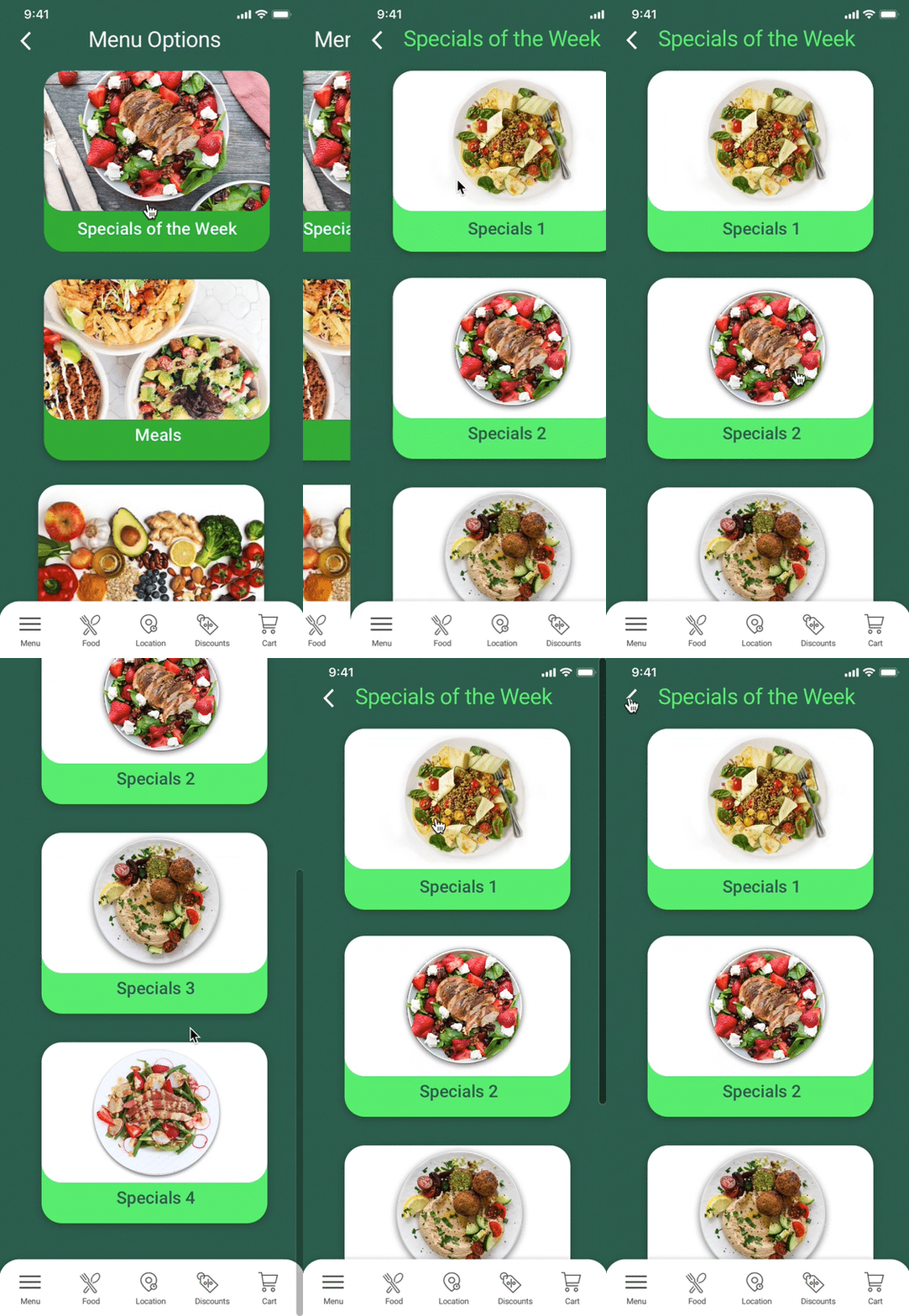
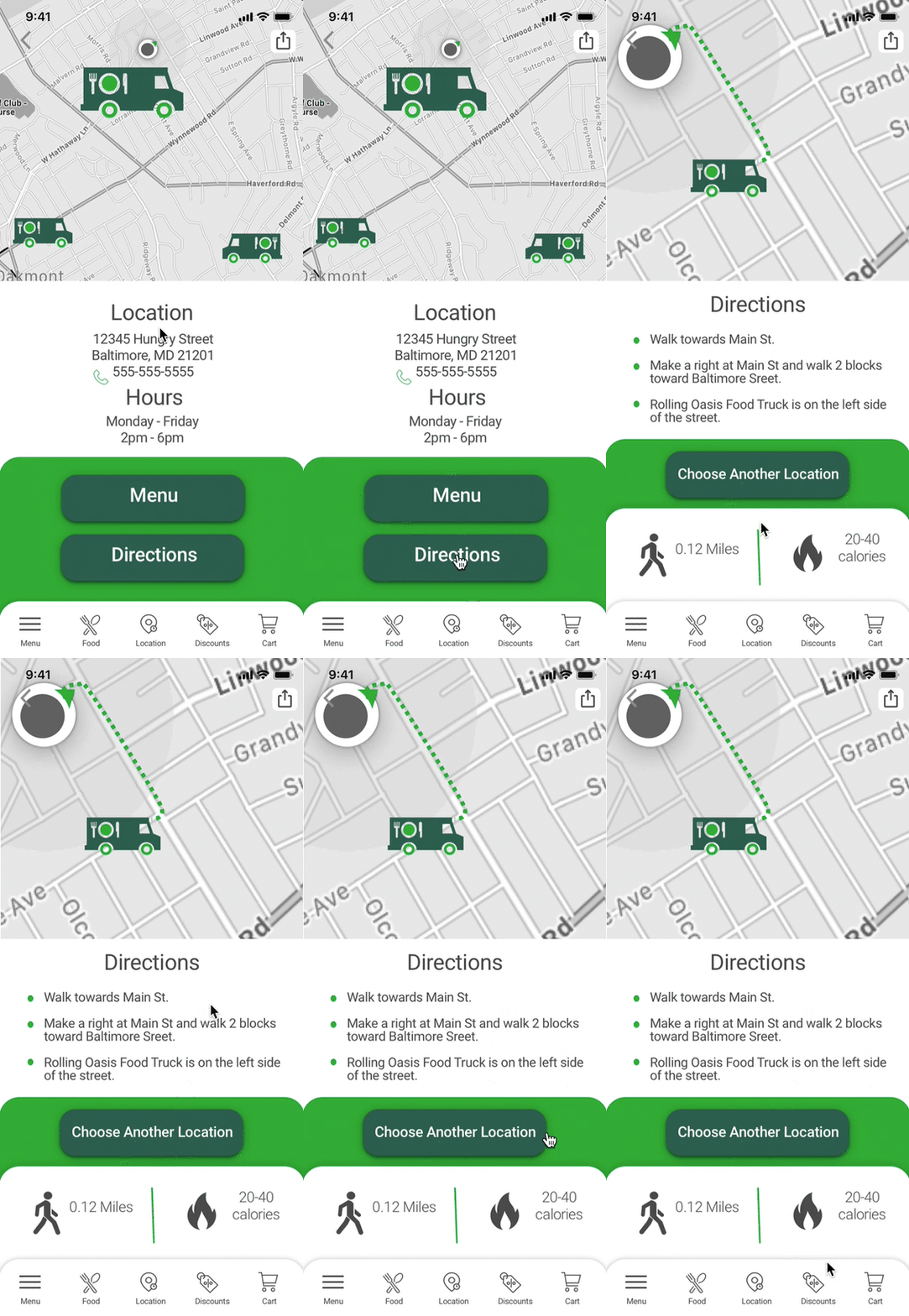
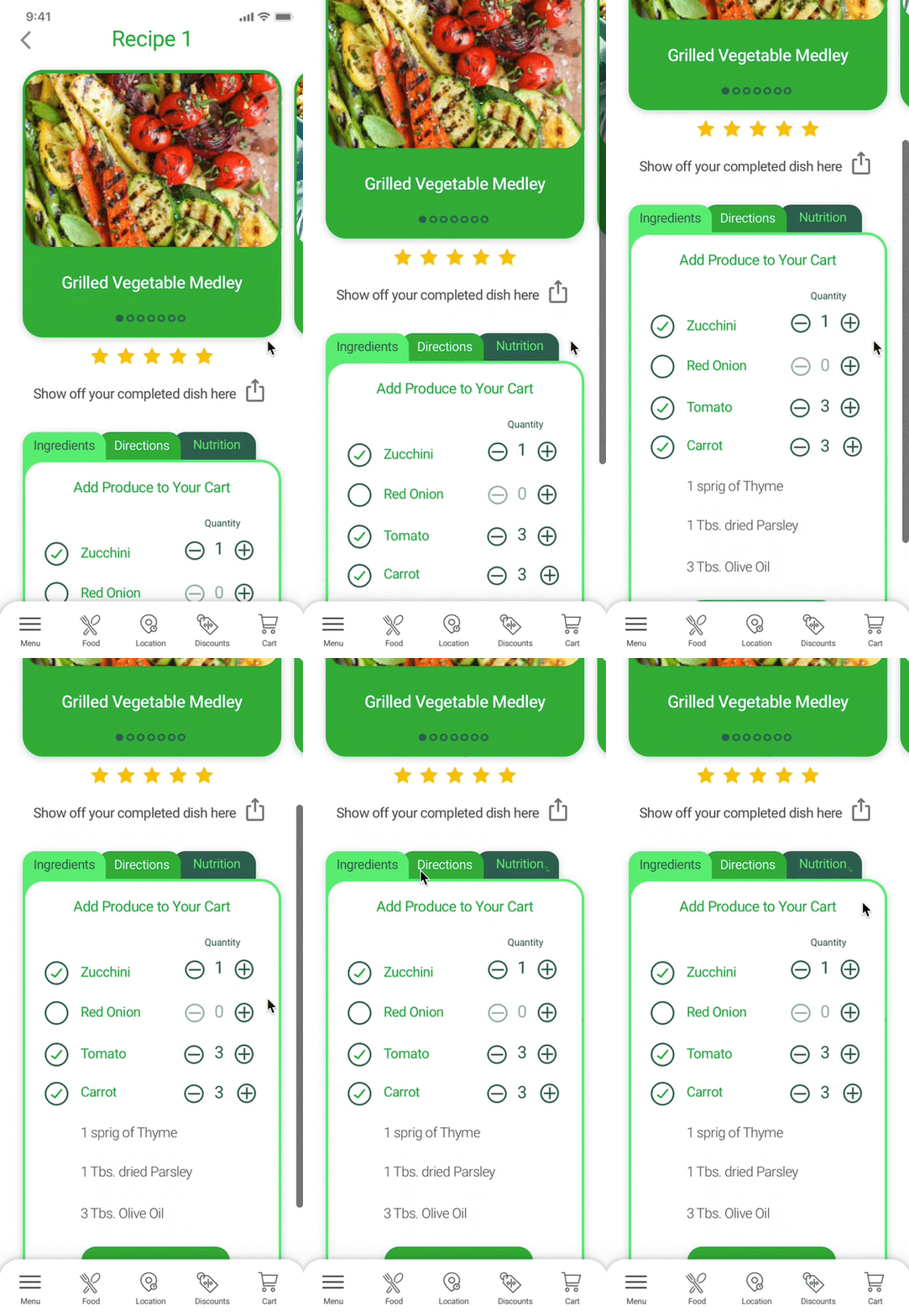
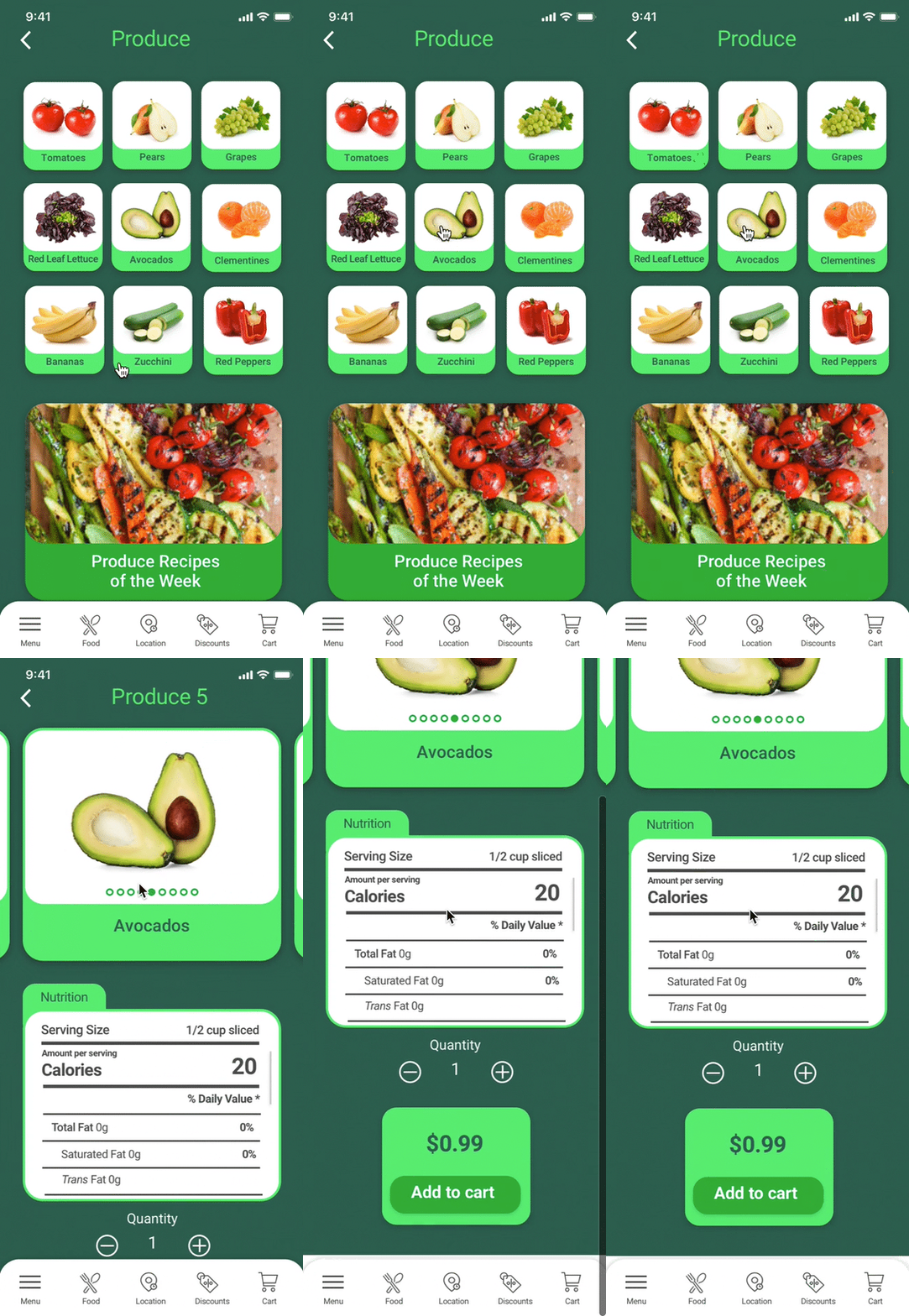
I suggested we name the application "Rolling Oasis" to represent a food truck oasis in a food desert, and designed the logo to include a bright horizon to reflect that concept. I chose a clean design, with vivid imagery and inspirational colors that reflect healthy eating, and delicious food that would be appealing to our user base. The design was incorporated in a high-fidelity prototype which was tested with users for validation of our concept and usability feedback.


Usability Testing
We recruited 10 participants to test a high-fidelity clickable prototype of the Rolling Oasis application in contextual settings on an iPhone. When we ran into challenges when wi-fi did not connect Sketch to the iPhone, we proceeded to test the prototype on a laptop.
Metrics for Success
Ease of Use (quantitative) - PURE method
Satisfaction (qualitative) - rating by user of overall experience
Results
The overall testing results proved to be successful and the user participants were positive and enthusiastic about the Rolling Oasis program and application. The PURE method results (below) revealed that out of 15 tasks, 4 iterations needed to be considered for the next phase. All iterations were addressed to improve usability.


"It's pretty clear and intuitive."
"I liked how in the recipes you could order all the ingredients in the same page."
"It's pretty friendly and was easy for me to figure out even
though it was my first time using the app."

Recommendations & Projected Impact of the Program
We made recommendations for the next steps of the project to include further building out the features within the application and conduct usability testing for further learning before launching the Rolling Oasis program and application. For the program to be successful in impoverished food deserts, it would also be necessary to obtain government grants to make it possible for the food options to be affordable and being able to include Food Stamp Benefit cards as a payment option, the Rolling Oasis application will be ready to launch into the marketplace for users to experience our program and application.
Over an extended period of time in the marketplace, it will allow for further learning on improving the application, healthy, tasteful food options and also the program’s success in changing users’ eating habits to promote a healthier lifestyle. As a result, it would be an important step in facilitating prevention of chronic diseases which can also have a trickle-down effect of reducing costs on our healthcare system.
UX toolkit
SurveyMonkey, Voice Recorder, Google Docs & Sheets, Marvel, Miro, Illustrator, InDesign, Sketch, Keynote, Zoom